Podcast Feature
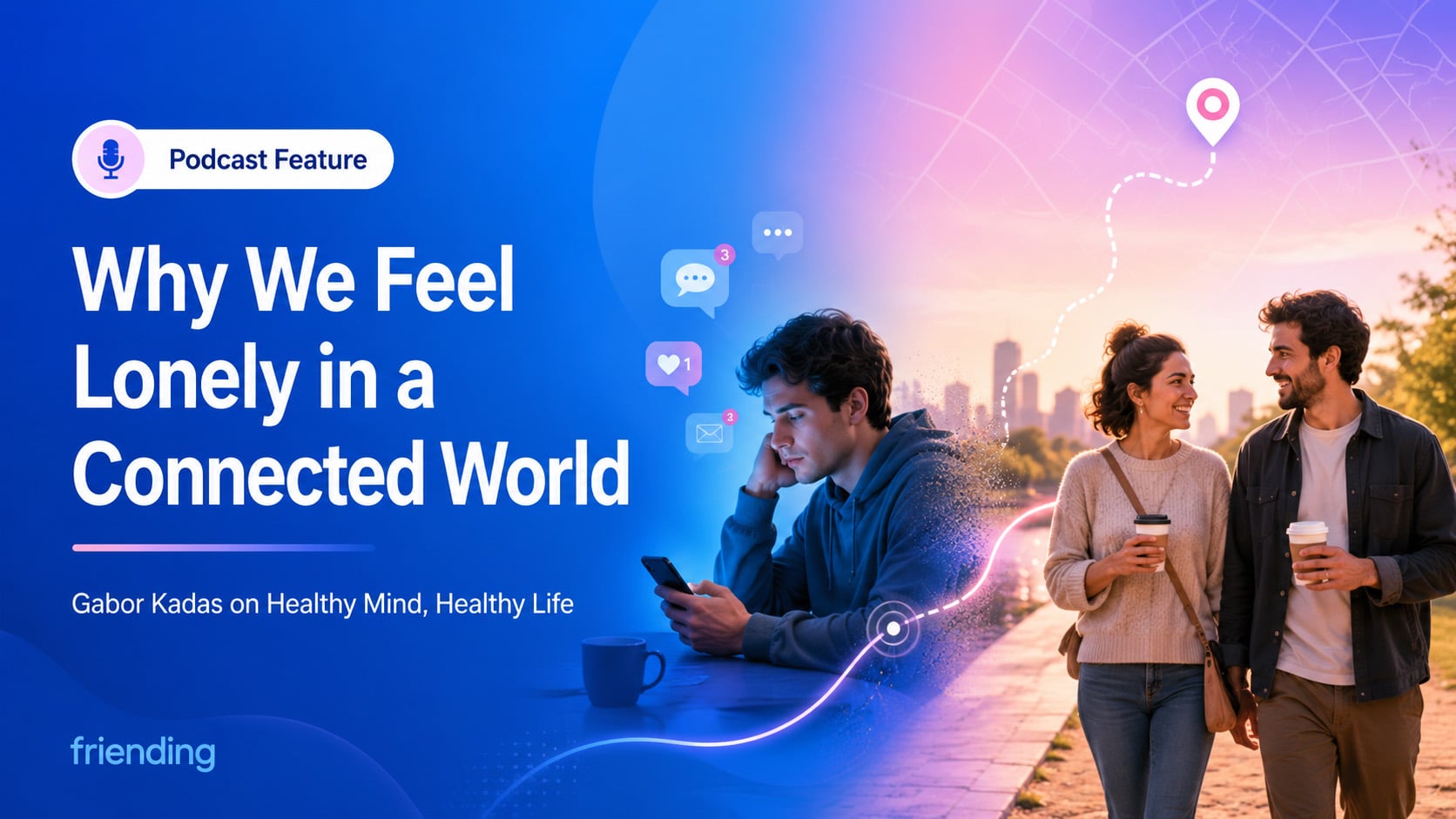
Why We Feel Lonely in a Connected World
Friending founder Gabor Kadas joined Healthy Mind, Healthy Life to talk about modern loneliness,
why online connection often fails to become real support, and how shared activities can help people build
friendships in the real world.
A conversation about loneliness in a hyper-connected world
You can have hundreds of online friends, full inboxes, busy calendars, and still feel like there is nobody
to call when life gets heavy. That quiet kind of loneliness is becoming one of the defining emotional problems
of modern life.
In this episode, host Yusuf speaks with Gabor Kadas, founder of the Friending app, about the gap between
digital visibility and real human support. The conversation explores why social media can feel like connection
while still leaving people isolated, and why simple offline moments — coffee, a walk, a jog, a shared activity —
can change something no endless scroll ever will.
Online friends are not the same as someone you can actually meet, talk to, and share real life with.
Why Friending was built
Gabor’s own story is shaped by repeated relocation across Hungary, the UK, Canada, and the United States.
Moving between countries means rebuilding social circles from zero again and again — and that experience became
part of the thinking behind Friending.
Friending is designed for people who do not just want another feed, another inbox, or another list of followers.
It is built to help people discover others nearby, connect around shared interests, and move toward verified,
real-world meetings.
☕
Shared activities
Coffee, walking, jogging, tennis, dinner, or a local event can become a simple starting point for real friendship.
📍
Local proximity
Real friendship needs practical distance. Friending focuses on helping people meet others they can actually see in real life.
🛡️
Verification and safety
Meeting strangers offline requires trust. Public first meetings and built-in safety features help lower the barrier to showing up.
🌍
Offline-first technology
Technology is not the enemy. Used well, it can help push people back into real-world contact and rebuild community.
Key takeaways from the episode
-
A long list of online “friends” is not the same as one person you can actually meet when you need support.
-
Loneliness often hides in plain sight. It can show up as cancelled plans, restlessness, low mood, or physical stress signals.
-
Real friendship is easier to build when people have proximity, shared interests, and a reason to meet.
-
Safety and verification matter when moving from online discovery to offline meetings.
-
Technology can either keep people scrolling or help them return to real-world connection. Friending is built for the second path.
From scrolling to showing up
One of the strongest ideas in the episode is that loneliness is not solved by more content. It is solved through
presence, shared time, and small but real steps toward other people.
That is why Friending focuses on practical, activity-based connection. Instead of keeping people inside endless
chat loops, the goal is to make it easier to meet in public, do something together, and give real friendship a chance
to grow naturally after the first meeting.
Friending’s core belief
The app should not replace human connection. It should become a bridge from online discovery to offline friendship.
Episode chapters
- 00:00 — Cold Open: The strange loneliness of a connected life
- 01:50 — Why loneliness is the quiet epidemic nobody talks about
- 04:00 — The big misconception: followers are not friends
- 06:30 — Technology, screens, and the false sense of belonging
- 09:20 — How Friending works: activities, verification, and real meetings
- 12:50 — Hidden signs of social isolation in your body and mood
- 14:10 — From many moves to one mission: Gabor’s personal story
- 17:10 — Real friendship after the first meeting
Listen to the full conversation
Hear Gabor Kadas on Healthy Mind, Healthy Life discussing modern loneliness, offline friendship,
and how Friending helps people move beyond online connection into real life.