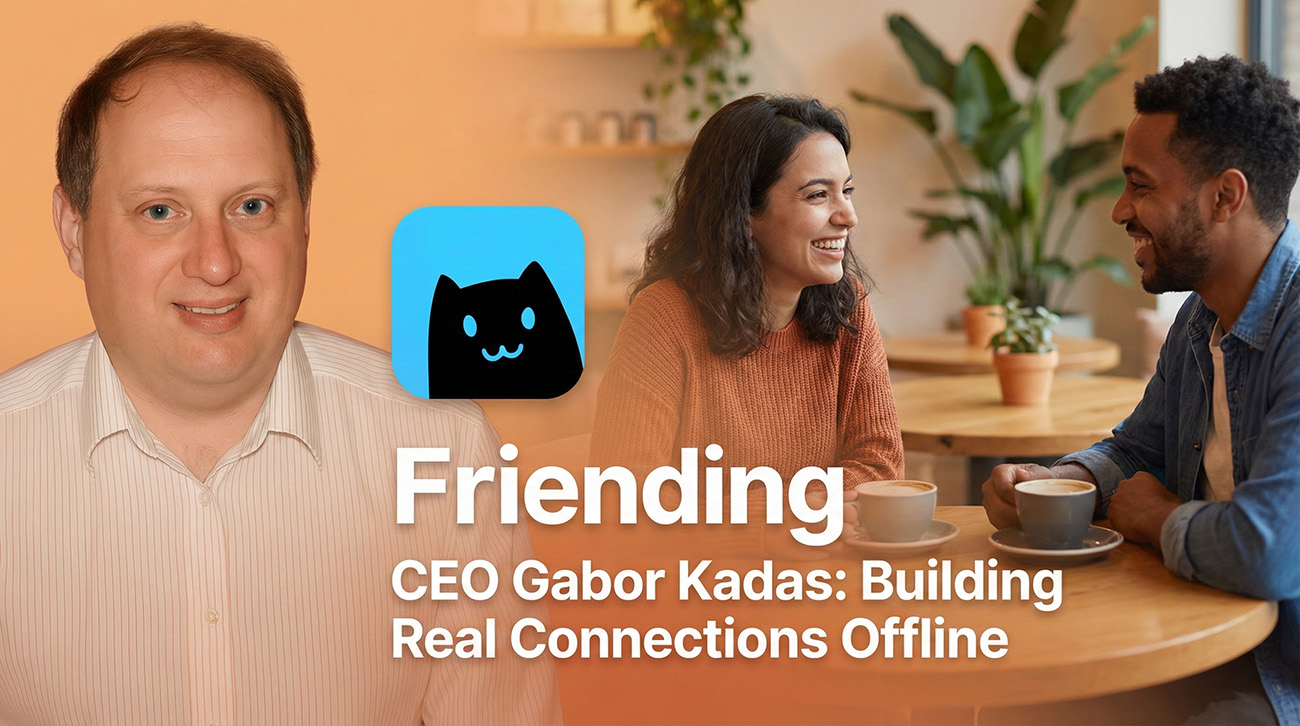
Friending’s CEO shares his personal journey across continents—and why the app is designed to help adults make real friends offline.
Loneliness is one of those things almost everyone feels at some point—yet most people hesitate to say out loud.
In a recent podcast conversation, Gabor Kadas, CEO of Friending, opened up about how years of relocating and rebuilding his social circle inspired a mission:
help people meet real friends in real life—not through endless scrolling, but through genuine, in-person connection.
🎧 Listen to the Full Episode
Want to hear the full story, including Gabor’s thoughts on “Speed Friending” events and our upcoming coffee integration?
The Loneliness Epidemic Is Real—and It’s Not “Just a Phase”
One of the biggest themes in the episode is that loneliness isn’t simply an awkward stage people grow out of.
Gabor points out that many adults quietly struggle with isolation—especially as routines become more demanding and friendships become harder to maintain.
He also shares what surprised him most while researching the problem: loneliness doesn’t only affect mindset and emotions—it can show up in the body too.
The takeaway is simple but powerful: connection isn’t optional. Humans are wired for community.
When friendship disappears, the impact can ripple through mental health, habits, and everyday wellbeing.
Gabor’s Story: Rebuilding Friendships Across Continents
Gabor’s perspective comes from lived experience. He was born in Hungary, grew up in London, then moved to Canada and later the United States.
Each relocation meant starting over socially—often with no existing network, and (especially earlier in life) no easy internet-based way to stay connected.
Over time, he noticed something many adults recognize instantly: the older you get, the harder it becomes to form new, meaningful friendships.
Work-from-home life can make that even tougher—because you lose casual daily interactions like hallway chats or quick coffee breaks with coworkers.
Why Friending Exists (and Why It’s Not a Dating App)
Friending was built with a clear goal: help people meet actual friends in real life.
Not a dating app. Not an endless social feed. Not a “stay-on-screen” experience.
Gabor explains a key difference in incentives: many social platforms are designed to keep you engaged as long as possible.
Friending is designed to do the opposite—to give you the nudge and structure to move from “online” to “in person.”
Design Choices That Push You Toward Real-Life Friendship
In the episode, Gabor shares several product decisions that make Friending fundamentally different from typical social apps:
Limited chat by design: Friending caps conversations (around 10 exchanges) so people don’t get stuck in endless messaging.
The goal is to move toward a real meetup.
Friendship requires meeting in person: Friending only confirms a friendship after two people have physically met—helping ensure connections are real, not purely virtual.
Verified humans (no bots): Friending uses third-party identity verification (government ID + selfie) to reduce fake profiles and catfishing.
Local-first discovery: Users typically see people within a limited radius (Gabor mentioned 50 miles) to keep friendships realistic and maintainable.
The philosophy is straightforward: friendship is real life. The app should support real-world relationships—not replace them.
Safety Features for Meeting Up
Because Friending encourages real-life meetups, safety matters. Gabor describes a safety flow designed for public meetups (like a coffee shop):
If a user feels uncomfortable, they can trigger an emergency action (described as tapping the screen multiple times),
which can alert help based on preset options.
The idea is to create a safer environment for first-time meetups—especially in a world where meeting strangers can feel intimidating.
How COVID Changed Connection—and Why the Effects Still Linger
The conversation also explores how the pandemic reshaped social life. Gabor notes that even years later, COVID’s cultural impact remains:
it changed workplace norms, accelerated remote work, and in many cases reduced everyday social contact.
He also reflects (as a non-medical professional) on how divisive the vaccination era became socially—sometimes splitting friends and families into opposing camps.
The broader point: when society becomes more fragmented, building community becomes even more important.
Friending Coffee and QR Messages: A Simple Gift That Feels Personal
A standout moment in the episode is when Gabor shares how Friending extends beyond the app into a tangible “connection experience.”
Friending Coffee products can include a unique QR code printed on the packaging.
When the recipient scans it, they instantly see a personal message from the sender—no account needed.
It’s a small idea with a big emotional effect: turning a simple gift into something warm, personal, and memorable.
Where Friending Is Going Next
Looking ahead, Gabor describes a roadmap focused on building real community:
Growing verified membership: verification costs money, so a future subscription (mentioned as ~$5/month or ~$50/year) may support safety and authenticity.
Speed Friending events: Friending plans tools for organizers—helping people discover local events and meet multiple potential friends in a low-pressure environment.
Travel-friendly connection: future features may allow people to connect in cities they’re visiting, enabling local-friendly meetups and shared exploration.
A Low-Pressure First Step If You Feel Isolated
One of the most practical moments in the episode is Gabor’s advice for anyone who feels stuck:
do something small, in public, and aligned with your interests.
Grab coffee. Join a casual activity. Say yes to a simple meetup.
Friending is built for that exact “first step”—helping you find someone nearby who shares your interests and making the move from online to offline feel easier.
Because sometimes, your next friend really is one small action away.