
2026: The “Deplugging” Cultural Trend
Introduction: The Quiet Rebellion
For the last two decades, culture has moved in one clear direction: faster, louder, more connected.
More screens. More feeds. More notifications competing for every spare second of attention.
But something has changed.
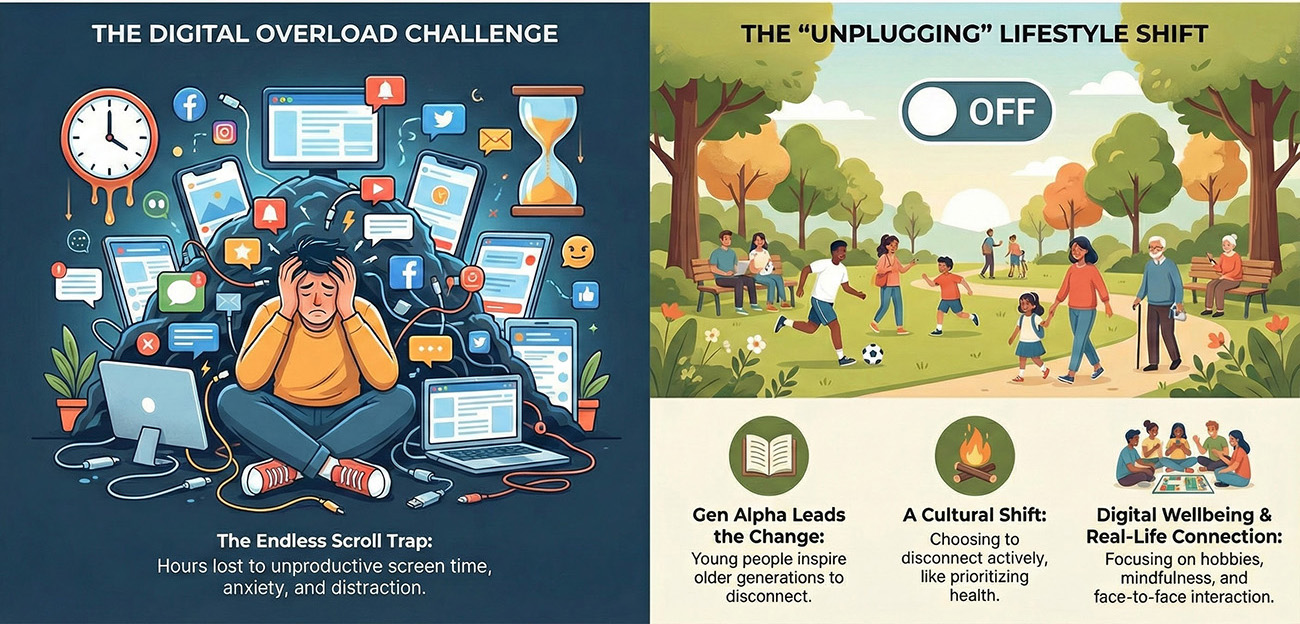
By 2026, a growing number of people are no longer asking what’s next online — they’re asking how to step away. Not as a rejection of technology, but as a way to rebalance their lives. This shift has a name now: the unplugging movement.
It’s quieter than previous trends. Less flashy. And far more consequential.
From Hyper-Connection to Saturation
The average American still spends hours a day on their phone, scrolling the equivalent of dozens of miles each year. Social platforms were built to maximize engagement, but that engagement has come with a cost: fatigue, distraction, and a persistent sense of mental overload.
Younger generations feel this tension most clearly. Surveys consistently show that many Millennials and Gen Z users feel overwhelmed by screen time — yet also feel unable to fully disconnect. Technology is essential, but its constant presence has become exhausting.
This contradiction is where unplugging begins.

Unplugging Isn’t Anti-Tech — It’s Pro-Presence
The unplugging movement isn’t about going off the grid or rejecting modern tools. It’s about intentional disconnection — choosing moments where screens step back so attention can move forward.
By 2026, this mindset is becoming mainstream:
- Phones away during meals
- Notifications paused during social time
- Screen-free spaces treated as intentional, even sacred
Offline time is no longer seen as empty time. It’s being revalued as high-quality time.
Gen Alpha: The First Truly Post-Digital Generation
The most surprising leaders of this shift are the youngest.
Gen Alpha — children who have never known a world without smartphones — are showing a clear preference for offline experiences. Many actively choose outdoor activities, physical play, and screen-free time as a way to manage stress and feel better.
This isn’t nostalgia. It’s novelty.
For a generation born into total digital saturation, real-world experiences feel new again. Their behavior is an early signal of a broader cultural correction that other generations are beginning to follow.
From Doomscrolling to Life-Scrolling
One of the defining behaviors of this era is time reallocation.
People are starting to look at their days differently — questioning how many hours disappear into passive scrolling, and what those hours could become instead.
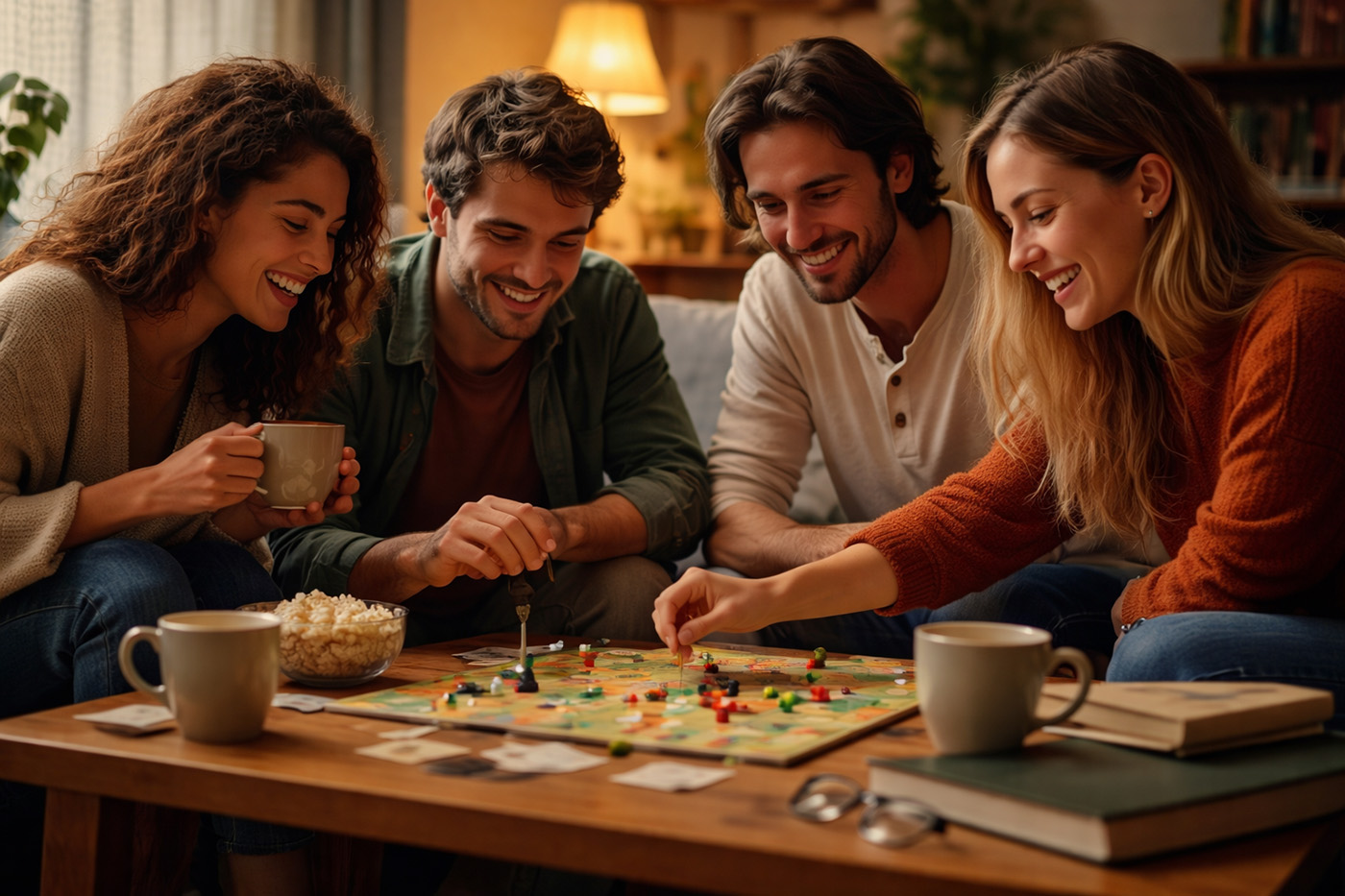
That same time gets redirected toward:
- Walking without headphones
- Long conversations
- Weekend hikes
- Board games, books, and shared rituals
- Small gatherings that don’t need documentation
It’s not about productivity. It’s about presence.
Just as exercise became a non-negotiable habit for physical health, unplugging is emerging as a habit for mental and emotional well-being.
What Unplugging Looks Like in Everyday Life
By 2026, unplugging shows up less as a dramatic gesture and more as a series of quiet choices:
- Experiential gatherings over content-driven events
- Outdoor activities as default leisure, not an exception
- Analog hobbies regaining cultural relevance
- Phone-free moments becoming socially accepted, even expected
Offline is no longer boring. It’s premium.
Why This Shift Matters
Unplugging reflects something deeper than screen fatigue. It signals a collective desire for:
- Fewer distractions
- More meaning
- Slower moments
- Real connection that doesn’t perform for an audience
Social media hasn’t disappeared — but it’s no longer where people go to feel connected. Increasingly, it’s where they go to fill time. The real moments are happening elsewhere.
This is why engagement is declining, why algorithms feel louder, and why audiences are harder to reach: attention has become selective again.
The Cultural Takeaway for 2026
The defining social shift of 2026 isnt AI, automation, or the next platform.
It’s a recalibration.
A move away from passive consumption and toward active, embodied experiences.
From constant stimulation to chosen simplicity.
From being always online to being intentionally present.
Unplugging isn’t withdrawal.
It’s renewal.
Conclusion: Less Noise, More Life
The future won’t be defined by how much technology we use — but by how consciously we use it.
People aren’t looking for more to consume. They’re looking for more to feel.
Moments that don’t need filters. Experiences that don’t need posting.
Connections that exist whether or not anyone is watching.
2026 marks the return of something quietly radical:
Real life, fully lived.